
Digital marketers have always needed to keep abreast of the latest digital marketing trends, as well as the latest tools and how to use them. But, as digital marketing is driven by technology and becomes inherently more analytical in nature, rooted in richer data and insight, marketers increasingly need to possess some technical skills and understanding to implement, integrate the tools and interpret the data.
Take, for example, online ad platforms such as Google Ads or Facebook Ads. Each can be implemented on their respective platforms without much requirement to touch any code or update your website, and you’ll get access to a huge amount of data on how well any campaign is doing; from impressions, clicks, views and other interactions to recommendations on how to improve your campaigns. That may well be enough for some people. But if you’re spending thousands of pounds on such campaigns wouldn’t you like to get the maximum return on your investment by ensuring your online campaigns are operating to their full potential?
With a little technical knowledge you can further integrate your ad platforms with your website or app which will provide further data and insight. Integration can also offer other features and benefits such as dynamic call tracking, dynamic ad creation, A/B split testing and more.
This is just one channel of digital marketing. There are many more. Such as organic search engine optimisation (SEO), where the crossover between creative, analytical and technical becomes even more blurred.
The ability to craft creative copy that is legible and engaging to both website visitors and search engines alike, whilst also understanding that this alone will not yield significant results and that there must also be good implementation of technical SEO is imperative to SEO success.
Technical skills are now among the most valuable and highly sought-out qualities in the digital marketing industry. Having an understanding of the technical side of a marketing strategy is hugely beneficial to maximising its effectiveness.
 Knowing basic HTML and CSS coding languages is an invaluable skill, while more sophisticated languages like Java and SQL are even more impressive.
Steve Armstrong, Marie’s Curie’s head of digital, believes the digital marketers of today must have a “good working knowledge” of technology so they can ask the right questions of their internal tech teams or digital agency.
“So much of marketing, certainly in the digital space, is driven by automation and technology, and unless you know a little bit about it then you’re in no real position to make intelligent decisions that actually might have quite a big impact on how you operate in one, two or three year’s time,” says Armstrong.
“Marketers don’t necessarily need to know how to code in HTML 5, but a working knowledge of technology definitely helps.”
However, Dan Gilbert, CEO of Programmatic, says coding is the number one skill he would teach a marketer.
“Everyone should learn to code and the next generation will definitely learn how.
“The digital world we’re in now is one where you have to experiment first and then learn from whatever you’ve experimented with later.”
Head of digital marketing at Lucozade Ribena Suntory, Rick Oakley says: “One of the things that really surprises me is when marketers say ‘I’m not techie’. You’d be very surprised if someone said ‘sorry I can’t read’. Technology is a modern language that more of us have to speak.”
So, if you’re a digital marketer with some serious technical skills and knowledge you could find yourself in demand, if not now then certainly in the not too distant future.
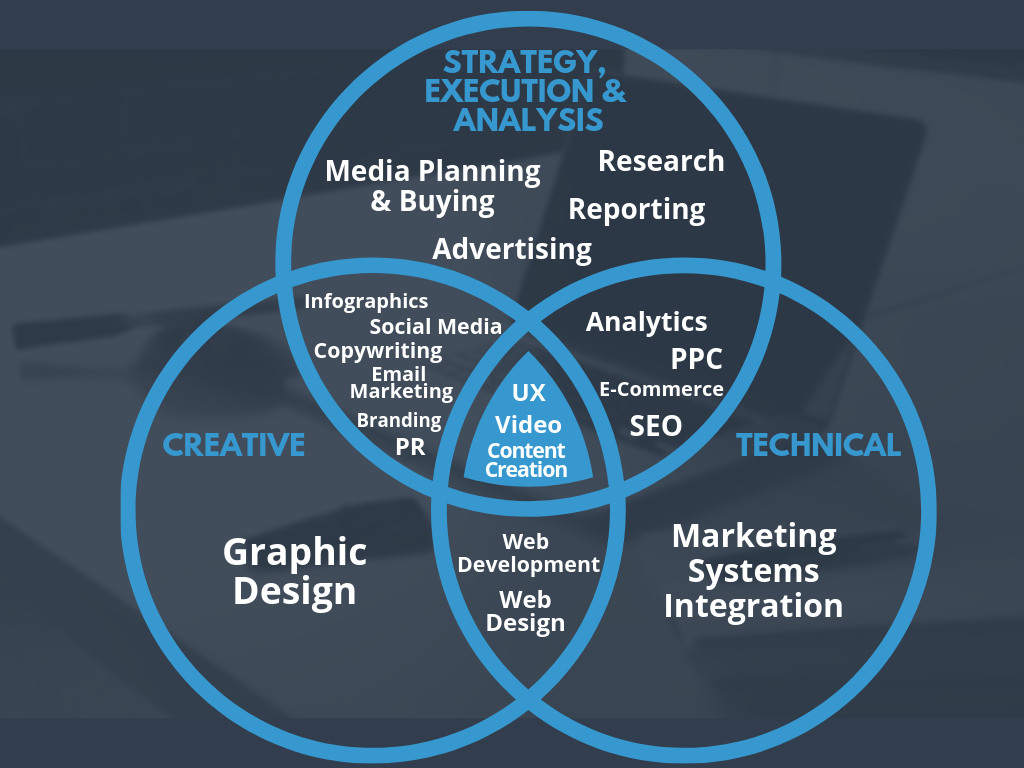
Many businesses, certainly SMEs, may have technical people and/or marketing people, however, rarely will in-house teams possess the mix of skills required to implement and execute a digital marketing strategy to its full potential, which is why, for the time being at least, digital marketing agencies are perfectly placed to offer this service.
But even in a digital marketing agency where traditionally the norm has been to employ experts or specialists in a particular area e.g. copywriter, designer, developer, marketer, or analyst, there is change afoot, as Direct Line marketing director Mark Evans predicts: “The big change I expect to see is marketing teams having a greater appreciation of diversity of thought and becoming more neuro-diverse in their makeup. This means that the marketing team can benefit from extremes of left and right brain thinking, and everything in between, without expecting it to reside in any single person’s brain.
“Many creative breakthroughs in the world have come from people who suffer from dyslexia, like my daughter, as well as other aspects of neuro-divergence including dyspraxia, dyscalculia and autism. In the end, if as predicted AI automates many of the tasks that require repeatable precision, then sustainable differentiation will only come from thinking that exists at the edges.”
So, clearly today’s digital marketers need not only marketing skills but technical skills, analytical skills, as well as being commercially savvy. In this blog we’ve hardly covered the creative skills (or natural talent) which, I believe, are required to be a successful digital marketer… all of which equates to quite a skilled individual.
Scott Brant is a director at digital marketing agency Vizulate Digital, having previously worked in in-house marketing and communications teams at a satellite TV channel, regional newspaper and professional motorsport teams.